The Gonorrhea Crisis

 Gonorrhea bacteria
Photo from CIDRAP

As the CDC outlines, gonorrhea, caused by Neisseria gonorrhoeae, is a sexually transmitted disease that affects both men and women worldwide. This disease causes infection in the genitals, rectum, and throat through the spreading of bodily fluids from unprotected sex. One of the scariest parts of this disease is that some men and women are asymptomatic and spread this disease to others without them knowing. For women, gonorrhea is commonly mistaken as a bladder or vaginal infection. According to Frontiers in Immunology, it is estimated that there are more than 106 million cases of gonorrhea worldwide each year and this is only increasing due to the development of multi-drug resistant N. gonorrhoeae.

“Super Gonorrhea”
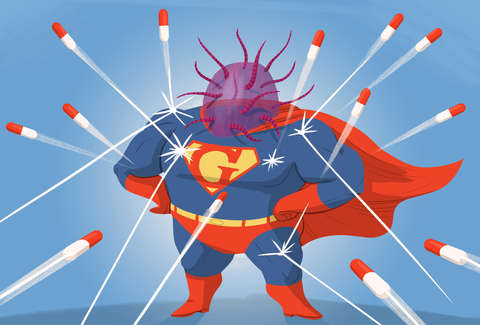
Image result for super gonorrhea
Photo from Thrillist

Frontiers in Immunology highlights that cephalosporins are now the last line of defense for N. gonorrhoeae, however, isolated strains containing resistance to extended spectrum cephalosporins have been found globally. Researchers have found that growing resistance is due to the lack of protective immunity following infection, the absence of a correlates of protection, and high level of phase and antigenic variation of N. gonorrhoeae surface antigens. A news report from the Center for Infectious Disease Research and Policy (CIDRAP) last September states that a case of gonorrhea in the United Kingdom was termed “super gonorrhea” as it was resistant to both components of the dual antibiotic therapy of azithromycin and ceftriaxone—the only remaining recommended treatment for gonorrhea. The man from the case had to be treated with 3 days of intravenous (IV) ertapenem. This antibiotic is usually a “last-resort” antibiotic reserved for severe, life-threatening infections and not intended for common sexually transmitted diseases (STDs).

Make New Antibiotics!!

In my personal experience, I have never know someone that has had gonorrhea so before this class, I really did not know much about this disease. After researching, I realize the importance of conserving antibiotics so that we do not have diseases that cannot be treated. Another unique trait of N. gonorrhoeae that I think is interesting is that doctors in the CIDRAP report found that this bacteria collects and holds onto the resistance mechanisms for fighting antibiotics that most other bacteria get rid of once the presence of an antibiotic is removed. This bacteria actually gathers the mutated genes and prevents doctors from using antibiotics that have been used once before. Innovation for new antibiotics is in high demand so that we can prevent these bacteria from becoming pan-drug resistant.


The HPV Vaccine Part 2

According to the CDC, Human Papillomavirus (HPV) is a sexually transmitted infection that has infected around 79 million Americans. Additionally, the prevalence of this disease is only increasing, as it affects around 14 million new people each year.

So what makes this STI different from other STIs?

As the CDC states, HPV has the potential of causing deathly cancers such as cancer of the cervical, vulva, vagina, penis, anus, and throat. There are more than 40 types of HPV that can affect the genital area, but 9 of them are known to cause the majority of HPV-related cancer and diseases. These are Types 6, 11, 16, 18, 31, 33, 45, 52, and 58. HPV is a growing threat to society.

But how do we eliminate the threat?

The answer is easy–vaccination! There are three vaccines available on the market: Gardasil, Gardasil 9, and Cervarix. The Gardasil (both Merk’s original and Gardasil 9) vaccines are a virus-like particle vaccine. This means that the vaccine is not infectious because it lacks the virus’s DNA, but it is extremely effective because it resembles the virus. The Gardasil vaccines induce the production of antibodies, that cause the body to build immunity to the virus. Therefore, if a person is exposed to the virus, they will be protected by their adaptive immune response. The Cervarix vaccine is a vaccine that can work against additional viruses/other microorganisms. It also highly effective against cervical cancer. According to the Healio, the vaccine has the ability to reduce 90% of cervical cancer incidence around the world. However, the vaccine comes with concern from the public. The vaccine is recommended to begin being administered around the age of 12-15. Many parents think this is too young of an age, and believe their children will become influenced to participate in sexual activity. However, the CDC just advises the vaccine be given before adolescents engage in sexual activity.

The Gardasil 9 vaccine is a 9-valent vaccine that helps to protect against all of the HPV types that were stated previously in relation to causing cancer. An article in Can Fam Physician describes clinical trials with the 9-valent vaccine where a double-blind study was performed involving more than 14,000 women ages 16-26. These women were given 3 doses of either the 9-valent or quadrivalent HPV vaccine–only protects against HPV types 6, 11, 16, and 18. The researchers found that the presence of cancer in the group that received the 9-valent vaccine was significantly less than the group that received the quadrivalent vaccine. The patients that recieved the 9-valent vaccine experienced slightly more adverse effects than the quadrivalent group such as swelling, pain, and erythema.

As I explained in my post from last week, I have never received the Gardasil vaccine. My lack of immunity to the disease is contributed to the hesitancy my mother had from reading articles on Facebook. My mother is very pro-vaccine as she is an ER nurse, so the fact that she has hesitancy towards this certain vaccine has always puzzled me. Recently, she sent me an article on Facebook on how the Gardasil vaccine has caused autoimmune problems in women that resulted in death. After investigating the source from which this article was published, I found that this source did not post reliable information. I learned from this experience that educating the public on the safety of vaccines is in high demand at this time. Without education, the public does not know what to believe.

To Eat or Not To Eat Cookie Dough

Chocolate Chip Cookie Dough


If you’re like me, then you have grown up eating raw cookie dough either oblivious to the health risk or thought the enjoyment outweighed the risk. Recently in December of 2018, the CDC published a feature on the health risks of eating raw cookie dough that could contain E. coli and Salmonella. Urging people to avoid the temptation of eating raw cookie dough, the CDC describes how flour is a raw agricultural product not treated to kill E. coli and raw eggs could possibly contain Salmonella. In 2016, there was a recall for flour that contained E. coli and made people sick in 24 states. E. coli infections vary but commonly include severe cramping, bloody diarrhea, and vomiting. Some with a certain E. coli infection developed hemolytic uremic syndrome (HUS) that caused kidney failure. Salmonella infections often include diarrhea, fever, and abdominal cramps but often recover without antibiotics.

On the other hand, other public health experts think that eating raw cookie dough isn’t a bad thing. Brian Zikmund-Fisher, associate professor of health behavior and health education at the University of Michigan, says in The Conversation that his family eats cookie dough “regularly.” Zikmund-Fisher describes that when his family makes cookie dough, they use pastuerized eggs that kill any harmful bacteria without actually having to cook the egg itself. As far as the potential contamination of flour, Zikmund-Fisher describes that this is a rare occurrence but that in the case of it, the FDA recalls the flour and he makes sure that his flour is not on the list of recalls. As a public health official, Zikmund-Fisher highly values the importance of communicating health risks to the public but he also believes that it is a choice of whether or not to take the risk and that a FDA official cannot make that choice for you.

Reading Zikmund-Fisher’s article, I believe he makes a good point; “We can’t pretend that we live our lives without risk. I put myself and my children at risk every time we get into our car. Every time we eat sushi or rare hamburgers. Every time one of us takes medications. Every time we ride a bike or play soccer.” I have eaten raw cookie dough and brownie batter for my entire life and while I realize it is a risk, I enjoy it. Just as Zikmund-Fisher said, we are always at risk in this world and sometimes it’s about weighing the benefits over the risks. It’s about maximizing life and not minimizing all risks. So thank you CDC, but I think I’ll keep eating cookie dough.

HPV-Associated Cervical Cancers Are In Decline

“Infections with two strains of the sexually transmitted human papillomavirus (HPV) are showing marked declines among American women, and rising vaccination rates could be driving the trend,” says E.J. Mundell in a U.S. News article. These were the results from a current study including thousands of American women that tested positive for precancerous conditions of the cervix. HPV is the leading cause of cervical cancer among women but since the widespread production of Gardasil and Cervarix between 2008 and 2014, cervical cancers rates have declined. It is apparent from these results that the HPV vaccine does effectively work to prevent cervical cancer in young women. So why is it that so many people are hesitant to receive this vaccine? First, lets explore what HPV is.

According to the CDC, HPV is the most common sexually transmitted infection (STI). There are different strains of HPV that cause certain infections including cancer and genital warts. HPV is spread through vaginal, anal, or oral sex and can be spread even when the infected individual is asymptomatic. In many cases, HPV resolves on its own and does not cause health problems but in cases where it does not go away, cancer or genital warts can occur. Genital warts can be small or quite large resembling a cauliflower shape. The best way to prevent such health problems is to get vaccinated. But like with every vaccine, there are those that have hesitancy.

Image result for mom social media vaccine meme
Meme from Know Your Meme

According to BBC, 1 in 3 girls in some areas of the U.K. did not receive the second dose of the HPV vaccine in 2017-18. A large part of the hesitancy for receiving this vaccine is fueled by social media. “Misinformation” or fake news about vaccine safety influences parents to not vaccinate their children. From my own personal experience, I have never received the Gardasil vaccine due to the hesitancy my mother had from reading articles on Facebook. My mother is very pro-vaccine as she is an ER nurse, so the fact that she has hesitancy towards this certain vaccine has always puzzled me. Recently, she sent me an article on Facebook on how the Gardasil vaccine has caused autoimmune problems in women that resulted in death. After investigating the source from which this article was published, I found that this source did not post reliable information. Even after explaining this to my mother, she still felt hesitancy. I have realized from my own experience the power of social media and that even through educated discussion on vaccine safety, many still do not listen.

Corruption, Fraud, and Retraction: MMR vaccine and Autism

In 1998, Andrew Wakefield and 12 others published a study in The Lancet medical journal investigating the correlation between impaired intestinal function to behavioral regression and pervasive developmental disorder. Wakefield based this study off of the observation of several children who went from being healthy to losing acquired skills, including communication, and also having gastrointestinal problems like abdominal pain, diarrhea, and some food intolerance. The researchers of this study hypothesized that the MMR vaccine may predispose children to behavioral regression and pervasive developmental disorder commonly associated with autism. Lets explore the inconsistencies for which this study was retracted and is fraudulent.

The experimental design of this study included 12 children with no control group. In the report Wakefield claims that these 12 children were referred to his department of pediatric gastroenterology but after investigation years later, it was found that these children were referred to Wakefield by the lawyer group planning to sue the manufacturers of the MMR vaccine, as stated in a New York Times article. Due to the fact that these children were not randomly selected and the researchers knew of their developmental conditions, a double blind study–where both the researchers and participants do not know who has which conditions–was not used.

In The Lancet journal article, the experimental process consisted of collecting immunization histories in addition to several tests like psychiatric assessments, colonoscopies, MRIs, EEGs, lumbar punctures, and assessments of stool and urine samples. According to the New York Times, the General Medical Council in Britain concluded that Dr. Wakefield had subjected 11 children to invasive tests like lumbar punctures and colonoscopies that they did not need and that he did not receive ethical approval for.

Image result for mmr vaccine
Photo from News Punch

Wakefield’s study incited fear in many parents then and still today for vaccinating their children with the possibility that they could develop autism. According to the Times, measles was declared eliminated in the United States in 2000 but because of parent’s resistance to vaccinate children, there has been numerous outbreaks of the measles including a major outbreak occurring in Washington State in 2019. The Indian Journal of Psychiatry describes how organizations around the world have spent vast amounts of time and money refuting the results of this study and have proven time and again that there is no link between the MMR vaccine and autism. Despite all of the evidence providing no link, anti-vax groups continue to develop new theories that are completely false today.

The Wakefield study could easily be one of the biggest medical fraud cases in the United States. Personally after investigating how this study contained no control group, the children were self-referred, and all evidence is just speculation, I do not understand how a prestigious medical journal like The Lancet could have published this. While The Lancet completely retracted this study in 2010, this left an imprint on the world that has created a major health crisis. In an age of social media, it is key now to discern life-saving facts from fatal fictions.

The Measles Crisis

In the United States today, resistance to vaccines is becoming increasingly more prevalent as more parents believe that “mainstream medicine” will harm their children. The World Health Institute defines vaccine hesitancy as follows:

Vaccine hesitancy refers to delay in acceptance or refusal of vaccines despite availability of vaccination services. Vaccine hesitancy is complex and context specific varying across time, place and vaccines. It includes factors such as complacency, convenience and confidence.

According to the CDC, there have been 101 cases of the measles in 2019 of which 54 of those cases have been reported as an outbreak in Washington state. Governor Jay Inslee declared Washington in a state of emergency on January 25 because of this problem. NPR claims that public officials blame vaccine hesitancy on these outbreaks. Washington is 1 of 17 states in the United States that does not require children to be vaccinated for school. I personally was unaware that the United States allowed states to choose whether not to require vaccinations. Because of this, parents scare other parents into believing that “mainstream medicine” could harm their child. What parents don’t see is that dying from measles is actually worse.

Distrust of vaccines may be almost as contagious as measles.

Medical Anthropologist Elisa Sob

WHO claims that efforts to combat vaccine hesitancy include using better communication strategies by healthcare workers to patients to recommend and educate the community on the safety and importance of vaccines. I think the only way to convince people that vaccines are necessary are by proving to them their effectiveness and emphasizing the devastating effects that could come from not vaccinating your child.

Superbugs Invade Society

According to The Conversation, almost 1 million people die every year from bacterial infections. The rise of superbugs–antibiotic resistant bacteria–is attributed to the misuse of antibiotics which allows bacteria to alter the ways antibiotics once targeted them, preventing them from working. Below are two antibiotic resistant organisms that pose a serious health threat to society.

1. Klebsiella pneumoniae

Science Photo Library/Alamy Stock Photo

Klebsiella pneumoniae is an encapsulated gram-negative enterobacterium that is associated with carbapenam resistant enterobacteria (CRE). According to Nature, carbapenam resistant Klebsiella pneumoniae (CRKP) is resistant to all b-lactam antibiotics making it one of the leading bacterial pathogens causing hospital-associated infections. Up until 2001, carbapenams were used as last-resort option for treating multi-drug resistant K. pneumoniae. This was before the first discovery of the production of K. pneumoniae carbapenemase (KPC) in isolated colonies in North Carolina (shout out NC). Since then, CRKP is found throughout the world. According to The Conversation, in 2013, 8,000 cases of multi-drug resistant K. pneumoniae were reported in the United States alone with a 50% death rate for bloodstream infections. In 2016, a strain of K. pneumoniae was found to be resistant to 26 antibiotics making this bacteria pandrug-resistant. The patient with this strain died due to lack of alternative treatments. This is not an isolated case as more bacteria are becoming pandrug-resistant. This presents a serious health threat for discovering alternative solutions for treating this infection.

2. Methicillin Resistant Staphylococcus aureus (MRSA)

Staphylococcus aureus is a gram-positive bacterium that quickly became another one of the leading bacterial pathogens to cause hospital-associated infections. According to Nature, penicillin was first used to treat S. aureus but was a short-lived solution as it developed resistance to penicillin in the 1940s. The first semi-synthetic versions of penicillin were created around 1960 and methicillin resistant S. aureus developed after 1 year of the first clinical use. MRSA was first discovered in the 1960s from clinically isolated patients in the hospital but since the 1990s, MRSA has spread throughout the community. In another news report from The Times of India, MRSA is spreading into the milk, poultry, and fish products of Gujarat. The prevalence of MRSA comes from the use and abuse of antimicrobials in human, animal, and environmental sectors.

The prevalence of MRSA around the world poses a serious health threat. So the question is, how do we prevent increased antibiotic resistance? Personally, I think there is a lot to blame on the doctors that over prescribe antibiotics like they’re candy. If this problem is going to be fixed then it is in the hands of the healthcare providers that treat such diseases to know when it is absolutely necessary to use such antibiotics. If this problem is never fixed, we very well may no longer have treatments for life-threatening diseases.

“To fight antibiotic resistance, we need coordinated action in society.”

Dr. Bhavini Shah from The Times of India


One Stool Does Not Fit All

Did you know that you could donate your poop to save others lives?

If you’re like me, then your answer is probably, “I’m sorry what?”

It’s true and it’s called a fecal microbiota transplantation, or just FMT for short. Highlighted by Frontiers in Cellular and Infection Microbiology, FMT involves stool from a healthy donor which is placed into another patient’s intestine. This method of treatment is used to treat microbial dysbioses–changes to the microbiota associated with negative functional outcomes. This method is commonly used to treat Clostridum difficle infection–a common disease acquired while in a hospital from antibiotic therapy. Routes of administration for FMT include endoscopic delivery, naso-intestinal tube delivery, retention enemas, or capsule ingestion.

Photo from Net#work BBDO

What constitutes a healthy donor?

The human gut harbors an abundant and diverse microbial community that is as unique to an individual as a fingerprint.

Frontiers in Cellular and Infection Microbiology describe that each person has a unique microbiome that is unlike any other. Because of this, what is defined as a healthy microbiome stands unclear. The authors claim that it is “generally accepted that having a stable and diverse gut community correlates with a healthy intestinal state.” Dysbiosis is associated with having a low microbial diversity. Other factors, both genetic and environmental, also have been found to influence FMT success among donors. Genetic differences in innate immune responses, or environmental factors such as diet, xenobiotic exposure–chemical substance not naturally produced by an organism, and microbial interaction all effect donor-recipient compatibility.

Can it treat other diseases besides CDI?

Due to the overwhelming success of FMT with CDI, researchers have started investigating the use of FMT for treating other diseases such as inflammatory bowel disease (IBD), irritable bowl syndrome (IBS), constipation and allergic colitis. Potentially using FMT to treat debilitating disorders such as Crohn’s disease and ulcerative colitis could affect millions of people that are suffering.

CRAAP

CRAAP is a test to evaluate the Currency, Relevance, Authority, Accuracy, and Purpose of a source. The article used in this post from Frontiers in Cellular and Infection Microbiology was published on January 21, 2019 which is very current. This source does give credible information about FMT and is written at the scholarly level my professor requires. This article was written by multiple authors who have their doctorates or are doctorate students from The Liggins Institute and The Broad Institute of MIT and Harvard which are both reputable institutions. Frontiers in Cellular and Infection Microbiology is a rigorously peer reviewed science journal that includes citations for all information provided within the article and at the end. The sources used throughout the article come from scholarly sources from within the last 5 years. The information provided comes from research studies as facts and there appears to be no bias in the information given.