Psoriatic Disease and Mental Health

Often when people hear the word “psoriasis” they think of the skin condition that causes red patches on the skin with silvery scales. What most people do not know is that psoriasis is an autoimmune disorder that attacks the cells of the skin. This condition can lead to inflammatory arthritis called psoriatic arthritis (PsA). This condition too is also an autoimmune disorder where the body mistakenly attacks the body’s own joint and skin tissue. The faulty immune system causes inflammation that causes joint pain, stiffness, and swelling. This disease can also be dormant in the body until triggered by an outside influence, like stress.

Image result for psoriatic arthritis

Stress and Psoriatic Disease

According to the National Psoriasis Foundation, stress is common trigger for psoriasis flare as well as psoriasis can also cause stress at the same time. Inflammation is the body’s way of responding to an injury by sending out chemicals (cytokines) to help heal that injury. For people with psoriasis, the body over-responds and so when stress (type of mental injury) is introduced, the body will over-respond with inflammatory cytokines which can lead to damage of cell tissue. There is also research that shows that women that experience stress are more likely to develop psoriatic related diseases, like PsA. There is currently no cure for PsA, only ways to treat signs and symptoms.

This condition is particularly important to me because I have lived with psoriasis since I was 6 years old. I first developed this condition when I was in the first grade (2 years into starting school for the first time in my life) and then it went dormant and has now reoccurred my sophomore year of college (coincidentally also my second year of starting a new school). Since starting college, I have experienced more stress than I have ever experienced in my entire life. I potentially one day could develop psoriatic arthritis so in order to try to prevent this, I have to practice stress coping methods every day.

Congenital Syphilis

Image result for Treponema pallidum
Treponema pallidum

Congenital syphilis (CS) is caused when a mother with syphilis (caused by the bacteria Treponema pallidum) transmits the infection to the baby during pregnancy and/or delivery. CS can have many harmful affects on a baby including premature birth, low birth weight, birth defects, blindness, and hearing loss. The CDC also highlights that babies born with CS can also suffer from severe anemia, deformed bones, or jaundice. According to the Philadelphia County Medial Society, pencillin G benzathine is the only efficient therapy for treating syphilis during pregnancy. This is unfortunate for women with an allergy to penicillin (like me). If a woman with syphilis reports a penicillin allergy, she has to be desensitized and still treated with this antibiotic.

Increased Prevalence of CS

Recently within the past few years, the prevalence of CS has dramatically increased. In 2018 in Pennsylvania, a total of 6 cases of CS were reported in the state which is the highest number of cases in 24 years. The Pennsylvania Department of Health (PADOH) also highlights how the number of women with syphilis of the child bearing age (15-44) increased 47% from 87 cases in 2017 to 128 cases in 2018. The 128 cases are the highest reported in two decades. This is also seen in other states across the United States, including California who reported 283 cases of CS in 2017 which is a 750% increase since 2012. The sharp increase of CS can be attributed to lack of protection during sexual intercourse and lack of prenatal screening which disallows early detection of syphilis.

Being that we live in 2019, I find it very surprising that CS rates are dramatically increasing with the available means for protection and resources to get tested that are out there. I personally believe that all women no matter what beliefs should by law have to go through prenatal screening. I have personally witnessed the effects of poor decision making by mothers has had on an infant’s life and they have no control over it. If a woman objects to the test, then it needs to be the priority to explain to her the importance of making sure her baby is healthy. There are numerous free clinics for women without insurance that perform such tests and provide women with the help and resources they need to raise their baby safely. My only hope is that over the next decade, these rates decrease.

Cancer Vaccines

When we often think of a vaccine, we think of the ones used to prevent certain diseases from causing disease in our bodies. They work to prevent disease by introducing weakened or killed viruses or bacteria into the body to mount an immune response. This immune response leads to memory which prepares the body for if this disease was ever encountered in daily life. Cancer vaccines work different from regular vaccines in that instead of preventing the disease, the vaccine works to promote the immune system to attack the cancer cells already existing in the body. Some of these vaccines are comprised of cancer cells, parts of cells, or pure antigens. Sometimes the doctor take the patient’s own immune cells and mixes them with these components to make the vaccine.

Sipuleucel-T (Provenge®)

Image result for dendritic cell meme

Currently there is only one vaccine approved in the United States to treat prostate cancer. Prostate cancer is the second most common male cancer in the world, affecting around 1.3 million people and killing more than 360,000 people per year (4% of cancer deaths worldwide). Prostate cancer is very treatable in its early stages but after it has metastasized, the survival rate drops to 30% so there is a great need for treatment options. The vaccine used to treat prostate cancer is called sipuleucel-T which is made from taking immune cells from the patient and exposing them to chemicals that differentiate them into dendritic cells. The dendritic cells are also exposed to prostatic acid phosphatase (PAP) which allows the vaccine to elicit an immune response against prostatic cancer cells. When the vaccine is injected into the body, the dendritic cells help other immune system cells attack the cancer cells.

Until researching this topic, I had no idea there are vaccines used to treat cancer. I find this treatment option particularly important because my grandfather currently has prostate cancer. With new treatment options becoming available for people like my grandfather, more lives can be saved. Now more cancer vaccines need to be approved by the FDA so that more cancers in the United States besides prostate cancer can be treating using immunotherapy.

Thimerosal in Vaccines

What is thimerosal?

Thimerosal is a chemical used to prevent prevent germs, like bacteria or fungi, from growing in the vaccines. If germs were to grow in vaccines, they could cause people to become sick or even die.

Controversy on Thimerosal

A lot of the controversy around vaccines causing autism in the United States stems from the use of a chemical called thimerosal as an additive in vaccines. People worry about thimerosal because it contains mercury that people believe will make people sick. While this is a common thought, there are different types of mercury and the kind of mercury in thimerosal does not make people sick. Types of mercury found in fish remain in the body while the type in thimerosal does not stay in the body. Common everyday items like contact lens solution, milk, and seafood naturally exposes us to mercury. According to the CDC, thimerosal has been used in vaccines since the 1930s and there is no evidence that it causes harm. Since 2001, thimerosal has not been used in vaccines for children, but some flu vaccines today still contain this additive. Despite numerous research supporting

Image result for mercury in vaccines memes

that thimerosal does not cause autism, people still believe that it does. The reason most people link autism to vaccines is that autism is diagnosed during the same age range that children receive their routine immunizations. Andrew Wakefield’s 1998 study connecting autism to the MMR vaccine left a huge impact on the world despite the article being retracted by the very journal that published it because of how flawed the study was. Even as of today, there has been no evidence that links autism to vaccines.

From researching, I believe the biggest reason why people are against the use of thimerosal in vaccines is the misconception that the mercury in thimerosal can harm people. I personally did not know that there are different types of mercury so if someone told me the flu shot I was being given contained mercury, I would probably question it too. In order to combat this misconception, people need to be informed that the type of mercury in this vaccine is not the same kind that causes harm. If they still do not believe it, then they can choose to get the vaccine that does not contain thimerosal and risk the possibility of becoming infected from germs.

Mosquitoes Suck (quite literally)

Image result for malaria region

Malaria is a mosquito-borne disease caused by the parasite Plasmodium falicparum. Malaria is very prominent in sub-Saharan African and South Asian countries but is spread to the United States primarily by travelers that have visited these areas. Typical signs and symptoms of malaria include patients that experience a cycle of fever, chills, and sweating with feeling healthy in between the “attacks.” There are preventative measures for people that plan to travel to countries where malaria is prominent which includes antimalarial drugs, avoiding mosquito bites with the use of insect repellents, or using insecticide treated bed nets. Some of the medications used as preventative measures include chloroquine phosphate, doxycycline prophylaxis, or the combination of atovaquone and proguanil. While these drugs provide a greater chance for not contracting malaria, they are not 100% effective which can be attributed to the increasing resistance to medications by P. falciparum.

Treating Malaria

The most effective treatment against malaria is artemisinin-based combination therapies (ACTs) which was developed in the 1990s. The combination of this treatment with rapid testing of malaria and increased push for insecticide treated bed nets decreased the global mortality rate by 30% between 2010 and 2015. During the 1990s, nearly 1 million deaths occurred every year from malaria and now only 400,000 of 220 million cases per year result in death.

Drug Resistant P. falciparum

The first widely used antimalarial drug made was chloroquine which developed resistance in South Asian countries just after WWII. These resistant strains quickly spread to Africa which holds the highest malaria problem of the world. Not only has malaria developed resistance against preventative measures, but partial resistance against ACTs have also developed. This was first seen in 2007 in South Asian populations where artemisinin began taking much longer to clear the parasite from patients. There are currently no other viable options for treating malaria so this presents a major threat, especially if resistant strains spread to Africa. While some worry about this threat, others believe this threat receives too much attention and is not actually a serious problem right now. For example, Steve Meshnick, a professor of epidemiology at the University of North Carolina at Chapel Hill, agrees that partial artemisinin resistance is, for now, a mere blip in the fight against malaria. “I’m not saying it’s not a problem,” he says, “but I think it gets too much attention.”

Personal thought, it is not surprising that P. falciparum is developing resistance to the drugs that treat it because just about every bug that causes diseases today is developing resistance. While right now this developing resistance may not pose a urgent threat, I do think this deserves attention and that efforts towards fighting malaria need to strengthen in the chance that resistance spreads to Africa, which it probably will eventually. New options for treating malaria need to be developed so that we have backup options.

The Resurrection of Measles: Religious Exceptions to Vaccines

Measles was declared eliminated from the United States in 2000. This was attributed to the effective MMR vaccine for measles, mumps, and rubella introduced in 1968. Measles is caused by a virus that includes signs and symptomsof high fever, cough, runny nose, and conjunctivitis. After a few days, small white spots (Koplik spots) appear on the roof of the mouth followed by a rash characterized by red flat spots on the skin. This highly contagious virus lives in the nose and throat of infected individuals and is spread by coughing or sneezing. This is a common disease in children that results in complications such as pneumonia, encephalitis that can cause deafness or intellectual disabilities, and even death. The resurgence of measles in the United States is attributed to vaccine hesitancy by parents which use religious exceptions to get out of mandated vaccine policies.

What are religious exceptions to vaccines?

Religious exceptions allow parents to have the choice to not vaccinate their children if they are against vaccines for religious reasons. Almost all states allow this except for West Virginia, Mississippi, Arizona, and California. More than 12 states also allow philosophical exemptions, or personal belief exemptions, which doesn’t require the parent to opt their children out for relgious beliefs but for moral reasons.

Connection to Measles

Recently, there has been a major outbreak of measles in a New York suburb of Rockland County which is highly centered in a ultra-Orthodox Jewish community. This community has also had some recent resistance to vaccines. Vaccination rates have been noted to be low among ultra-Orthodox Jews for reasons including fear of interference from outsiders and confusion with accurate medical information. Other resistance comes from the idea that vaccines interfere with the divine plan for someone’s life decided by God or that vaccines go against religious dietary laws. Some Orthodox Jewish schools have been allowing unvaccinated children to attend school during the measles outbreak, which is against the New York department’s mandate.

Personal opinion, I understand that we have freedom to do whatever we want in America, but I also believe a line should be drawn when the decisions made my people affect others without them evening knowing. Vaccine hesitancy is the reason measles has resurfaced. This virus is spreading and affecting people that can’t even physically get the vaccine like those that are immunocompromised. This is a difficult issue and I hope that this outbreak will persuade states to change their laws regarding religious exemptions.

Tuberculosis Vaccination for All!

Image result for we belung together american lung association
Photo from American Lung Association

Tuberculosis is a disease caused by the bacteria Mycobacterium tuberculosis that kills millions of people every year. BCG, or bacille Calmette-Guerin, is a vaccine prepared from a live attenuated strain of Mycobacterium bovis that is the only approved vaccine against TB but has proven to not be effective against pulmonary TB. BCG is a vaccine given in the muscles of the upper arm which provides protection against tuberculosis meningitis and miliary TB but not against TB that enters the lungs, which is the most common portal of entry. BCG is used in countries with a high prevalence of TB but is not used in the United States because there is a low risk for infection, this vaccine is not effective against pulmonary TB, and this vaccine causes tuberculin skin tests to read positive which makes it difficult to identify patients with actual TB. To combat pulmonary TB, researchers led by Dr. Jordi Torrelles have developed a new type of TB vaccine that has so far proven to be effective against pulmonary TB in animals and human macrophages.

Intranasal Delipidated BCG Vaccine

One of the main reasons tuberculosis is so damaging to the lung is from the potent pro-inflammatory lipids contained in the cell wall of the Mycobacteria. These lipids induce rapid and powerful innate immune responses that cause inflammation and damage to the lung tissue. Researchers discovered that removing these lipids from the BCG vaccine (delipidation) leads to lowered innate inflammatory responses without affecting the viability of the vaccine. This led researchers to hypothesize that delipidated BCG (dBCG) can provide efficient protection for pulmonary TB. This vaccine is so groundbreaking because it could provide immunity for people of any age or stage of immunocompetency. BCG currently cannot be given to immunocompromised patients such as elderly or HIV/AIDS who are at a high risk for developing TB. This modified dBCG vaccine causes less burden and delays immunopathology so immunocompromised individuals can tolerate this type of vaccine. Dr. Torrelles claims that this type of vaccine does not fall into the general category of vaccines like attenuated or inactivated so he has classified dBCG under a new category of vaccines called “selective attenuation.”

I personally find this research so interesting because if it goes through all necessary testing and becomes approved by the FDA, the majority of the population, including those that are immunocompromised, can have effective protection against the most common form of TB that kills so many people. I also find it creative that the researchers predict this vaccine to be an intranasal spray that works similar to an asthma inhaler (but like through the nose). If you’re like me, shots are not my thing, especially when I was a child so having a vaccine that can just take a spray or so up the nose would provide a lot more comfort for those afraid of needles. I truly hope that this vaccine is successful and that millions of lives across the world can be saved.

Eradicating Polio

In 1979, researchers thought they had eliminated smallpox worldwide, but in a U.K. university lab, a scientist, not following proper safety protocols, released smallpox, infecting the scientist himself and a college student with a room just above the lab. Now researchers are working on eradicating another almost-gone disease: polio. Eradicating a disease is difficult for numerous reasons including the failure to vaccinate people, keeping track of outbreaks, and the trouble of locating and containing every single sample of a virus that has ever existed, as failed to happen in 1979. So far in 2019, there have been 6 reported cases of wild polio virus (Pakistan and Afganistan) and 2 cases of vaccine-derived polio virus (Nigeria) which is significantly reduced from the 350,000 cases in 1988. This significant drop can be attributed to the eradication efforts of organizations such as the Global Polio Eradication Initiative.

Global Polio Eradication Initiative

Polio Surveillance Network

One effort towards eradicating polio has been to keep track of outbreaks so that they are isolated to one area and to make sure polio is not hiding in remote areas of the world. Global Polio Eradication Initiative, the Bill & Melinda Gates Foundation, and WHO’s Regional Office for Africa have worked together in making a high tech surveillance network that allows real-time detection of suspected polio cases anywhere on the continent. Thousands of healthcare workers, volunteers, and community members are trained with phones to conduct regular surveillance visits at health clinics in Africa. This system allows immediate action to be taken by teams for investigating the polio case. By having an immediate updated system, the spread of polio can be controlled and treated as fast as possible.

Women on the front-lines of polio eradication

Not only are eradication efforts focused on technology but also social realities. A large part of the success of the Global Polio Eradication Initiative is knocking on people’s doors and establishing rapport with the caregivers of the home so they will allow the health providers to vaccinate the family members. In many parts of the world, decisions to vaccinate are based on social, economic, religious, and cultural reasons. Female healthcare workers are able to work through the influences because not only are they female healthcare providers, but trusted members of the community. In outbreak countries, women make up 68% of the front line workforce.

Because I have grown up in the United States where polio no longer exists, I have never realized or thought about how this disease still affects people in other countries. The efforts made by people to eradicate polio has reduced the prevalence of this disease and prevented thousands of adults and mainly children from becoming paralyzed or even dying. My hope is that one day we can say polio is eradicated and future generations do not have to worry about this disease. It is the responsibility of healthcare providers to keep communities educated on the importance of vaccination. As someone who plans to become a pharmacist and is pro-vaccine I hope that one day I can contribute to the eradication efforts made worldwide.

Antibiotic Resistant Tuberculosis

Tuberculosis (TB) is a bacterial infection caused by Mycobacterium tuberculosis that threatens millions of lives today. The bacteria usually infect the lungs but can also attack the kidneys, spine, and brain as stated by the CDC. Not everyone that has TB gets sick because there are two forms of this disease: latent TB infection (LTBI) and TB disease. Only people with the TB disease are able to spread TB to others which is becoming more of a problem as TB is becoming more difficult to treat with the rise of antibiotic resistance. The American Lung Association describes two types of multi-drug resistant TB (MDR-TB) and extensively-drug resistant TB (XDR-TB). MDR-TB is a result of TB being resistant to the antibiotics that have been used to treat TB for years such as isoniazid and rifampicin, the 2 most powerful anti-TB drugs. XDR-TB results from TB being resistant to the same first line drugs as well as additional secondary drugs used to treat MDR-TB.

An article from Science Daily describes a new drug that has been found to be more effective against TB than isoniazid and shows a lower tendency to develop resistance. Isoniazid requires an enzyme found in the bacteria to convert the medication to its active form to kill the pathogen. The problem with this is that some TB bacteria do not have this enzyme so under selective pressure with isoniazid, the bacteria without this enzyme reproduce, creating resistance. This new drug, named AN12855, has been found to enter and remain in the granulomas of lung tissue in mice, where the highest amounts of bacteria are found, longer thus killing them more effectively and reducing treatment time for patients. This provides promising results for a better drug to treat TB as an alternative for the current drugs that are expensive ($17,000/patient with non-MDR-TB, $134,000/patient with MDR-TB, and $430,000/patient with XDR-TB), and require treatment for 6-9 months which can have adverse effects on the normal microbiota of a person.

The rise of antibiotic resistance comes from TB drugs being misused or mismanaged such as when people do not take the full course of treatment, healthcare providers prescribe the wrong treatment, dose, or length of time, or drugs are poor quality. As someone who plans to become a pharmacist one day, I hope that in my career I can contribute to lowering the prevalence of antibiotic resistance in diseases. I remember one time from when I was a child and my mother came home to tell me she had been exposed to a TB patient in the hospital and had to be quarantined. Luckily she was not infected, but to think there are TB infections now resistant to treatments has a really scary impact on me. In addition, I never knew how expensive it was to treat TB and especially more resistant TB which is crazy to think about for people that do not have health insurance. As a future healthcare provider, I hope to spread awareness of antibiotic resistance so that people’s lives can continue to be saved.

The Common “Pain in My Ass”: Rhinovirus

Related image
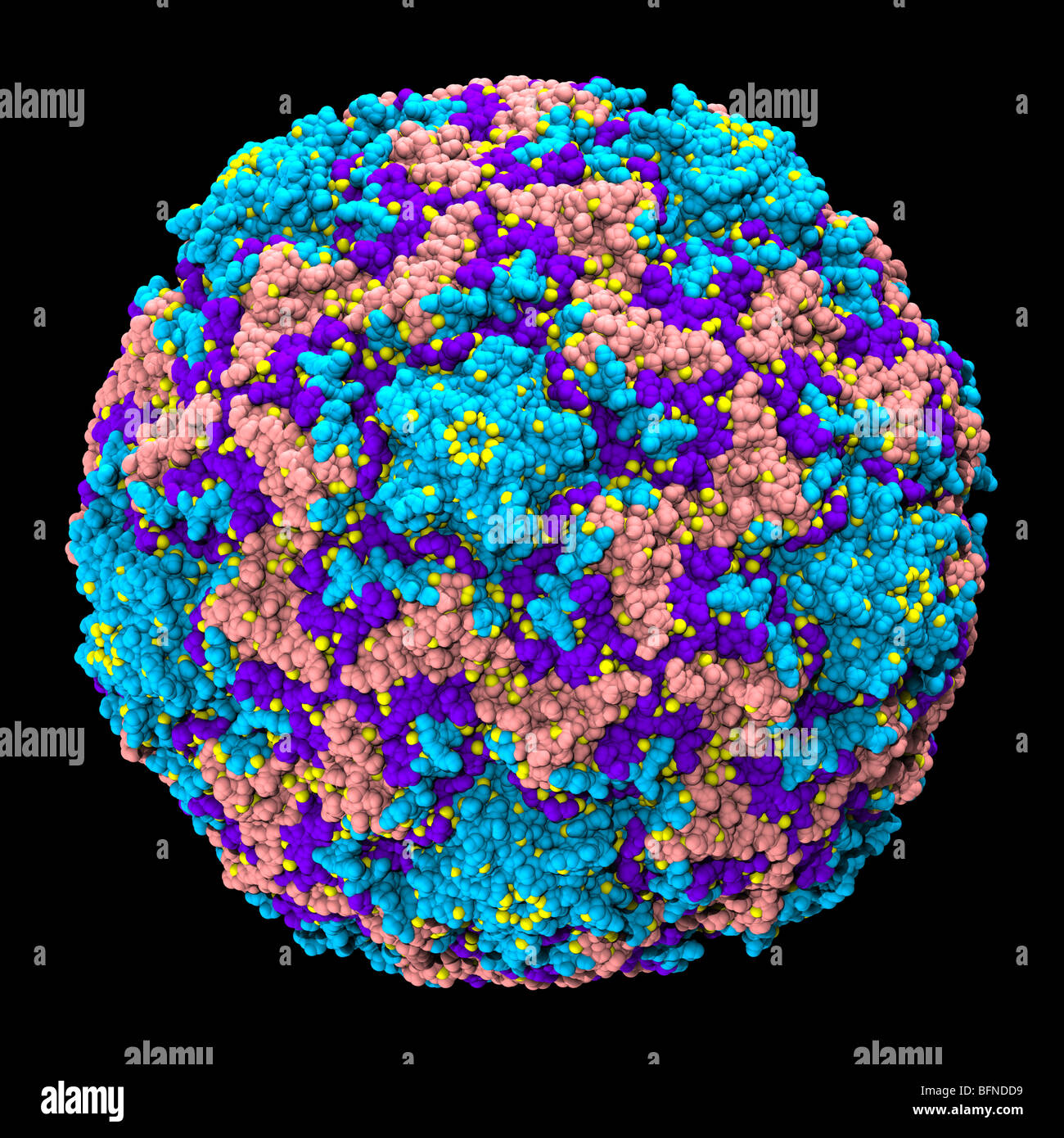
Human rhinovirus capsid

As someone that does not get sick very often with more serious infections such as the flu, strep throat, pneumonia, or even sinus infections, the common cold always seems to love my body. As stated by the CDC, the common cold, most often caused by the rhinovirus, is one of the most common infections worldwide ranging around millions of cases each year in women, men, and especially children. Common symptoms of the common cold are runny nose, sore throat, coughing, sneezing, or headaches (similar to the flu). The common cold differs from the flu in that the flu symptoms are often more severe including fever. There is no vaccine or cure for this viral infection, but the body generally resolves this infection on its own. The CDC describes that the number one way to prevent yourself from getting this infection is to wash your hands often with soap and water. Due to children being less prone to washing their hands, they get this infection more often than adults.

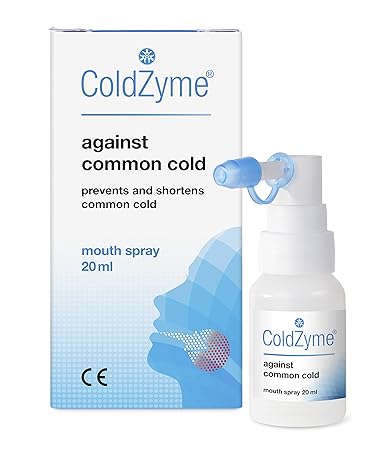
Image result for is the coldzyme spray sold in america?

While it has been said that there is no cure for the common cold, just recently as of March 1, 2019, a Swedish study was published by the Royal Pharmaceutical Society where an enzyme mouth spray has been tested to shorten duration of the cold. This enzyme spray called ColdZyme is an oral spray that contains a proteolytic enzyme to reduce the effects of sore throat, nose congestion, and headache. The study performed included 267 participants all with the common cold and were randomly assigned to use the ColdZyme spray 6 times daily. The results showed that the ColdZyme-treated group experienced lower symptoms, had better quality-of-life scores, and the duration was shorter. In-vitro research with this spray showed that it can inactivate 99% of viruses that cause the common cold. This spray is sold in pharmacies in numerous countries in Europe but is not sold in the United States.

As someone who is convinced she has had the common cold for 2 months now, a treatment like this really interests me. I consistently have a runny nose, sore throat, and sneeze sometimes to the point where I cannot speak normally anymore. A treatment like ColdZyme could potentially provide me with relief that I cannot find from any other medication currently in the market. As with any treatment, there could be potential side effects not stated in this article and there is no telling whether the FDA will approve this treatment or not. But I will hold on to hope that one day something will help me not have to blow my nose a million times a day.